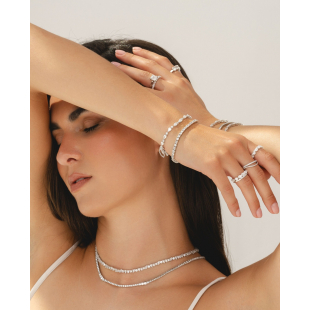
A single necklace is beautiful on its own, yet when you start layering, the entire composition transforms. Each piece begins to play its part, creating depth, movement, and a style that's uniquely yours. Layering necklaces is a modern favorite trend because it offers room for creativity, versatility, and self-expression.
From a solitaire diamond necklace to a birthstone pendant, the right mix moves seamlessly with you. The balance comes from considered choices, such as shape, length, texture, and placement, all working together.
What is necklace layering
Layering is the practice of wearing multiple chosen necklaces at once so they read as one considered composition. Foundational pieces like diamond pendants often help tie the composition together. It allows you to combine many moods in a single look. Its appeal spans everyday and occasion wear.
For instance, two or three pieces can bring interest to a simple knit or tailored shirt. On evenings out, an added pendant or a longer chain can shift the focus without changing your outfit. It works best when the mix is intentional and when each necklace has the space to be seen.
Understanding the basics of layering
1. Start with a focal point
Begin with an anchor. Choose one piece to set the tone, then build around it. An anchor can be a solitaire diamond necklace, a bar pendant, a locket, or a gemstone charm with personal meaning.
If you favor a classic center, a round solitaire pendant in a refined setting gives you a clear focal point and a center line to style around. Similarly, if the anchor has presence or scale, keep the supporting chains lighter so the eye always returns to the centerpiece.
Staggered lengths create balance and help avoid tangling. A useful trio is a choker or close collar length at 14 to 16 inches, a classic pendant length at 18 inches, and a longer line at 20 to 24 inches. This spacing guides the eye from top to bottom and gives each necklace a defined place.
Small adjustments make a big difference. A pendant that sits one inch higher can move from competing with another piece to perfectly framing it. Consider chains with built-in adjustment or add a short extender so you can set the drop precisely for each outfit.
3. Mixing textures & styles
Texture brings layers to life. Combine a fine cable chain with a slightly heavier paperclip link. Set a smooth, polished chain beside a diamond pavé pendant. Pair a round pendant with a slender vertical bar to introduce direction and flow. Contrast makes each layer more defined.
However, ensure that you keep one constant to hold the composition together. The constant could be a shared metal color, a repeating shape, or the presence of diamonds throughout.
4. Incorporating personal touches
Personal elements give your layers character. Initials, numbers, zodiac signs, and birthstones can sit close to the collarbone, while a sculptural pendant can take the mid-position.
Pieces from thoughtfully curated jewelry gift sets can be an easy way to start building a layered look, as they’re designed to work beautifully together yet remain versatile enough for mixing with other favorites.
Diamond pendants for everyday luxe
Diamonds lift a layered look in an instant. A solitaire diamond necklace makes a strong anchor because it centers the arrangement and introduces a clean sparkle. A small diamond cluster can sit higher or lower to echo that light.
For instance, our floral cluster, Darby, has structure and movement at once. Its round diamonds are arranged in a refined cluster using pressure and full bezel settings, so the outline reads soft and dimensional, and the surface stays smooth against the skin. It works well as a middle layer.
Heritage & heirloom pieces
Inherited necklaces can also find a place in layering as they add depth and history. A vintage chain pairs beautifully with a modern pendant, and a family locket can be updated by placing it on a contemporary link. Modern jewelry gift sets can be mixed with heirlooms, creating a beautiful blend of old and new layers.
Balancing proportions and colors
Scale and proportion are the foundation of successful layering. If your anchor is bold, keep companion chains slimmer so everything reads as one. If your anchor is refined, increase interest by adding a textured link or a pendant with a defined silhouette. Think in ratios. One statement, one medium, one fine will often read balanced on the body.
Metal color can either unify or contrast. Matching metals across the set creates a continuous line. Mixing metals introduces a contrast and can help a pendant stand out. If you mix, repeat each metal at least once in the stack so the combination looks deliberate.
Layering for different necklines
Necklines frame your layers and influence where each piece should sit. A V-neck benefits from a pendant that mirrors its line. A pear drop, a tapered bar, or a centered solitaire that rests just inside the V creates symmetry and length.
A scoop neck invites round forms. Circular pendants and floral clusters sit beautifully within the curve, especially at 16 to 18 inches, where they remain visible as you move.
High necks and turtlenecks create a canvas for length. A long chain at 22 to 24 inches with a defined pendant gives a clean vertical line over knitwear. This length can be paired with a shorter chain that peeks just at the collar to add depth.
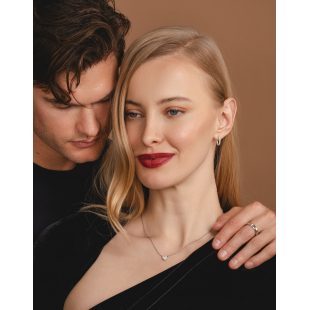
Strapless and off-shoulder styles highlight collarbones. A close necklace at 14 to 16 inches frames the face, while a second pendant at 18 to 20 inches adds a gentle second focal point without competing with the neckline.
Button-down shirts offer another opportunity. Set a short chain to skim the base of the throat, then let a longer pendant drop between the first open buttons. The arrangement looks considered and sits comfortably throughout the day.
Common layering mistakes to avoid
Too many large pieces can feel heavy and reduce movement. Keep one statement element and support it with lighter companions. Themes that do not speak to one another can appear scattered.
Tie the story together by repeating one detail, such as a shared gemstone or matching metal. Lengths that sit too close often lead to tangling. Adjust by half an inch at a time until pendants no longer collide. If tangling persists, vary chain types and weights so they slide differently across the skin.
Consider comfort at the clasp. If multiple clasps gather at one point, they can create pressure. A connector can space them evenly. Check pendant backs for smoothness so they rest well against fabric and skin.
Final thoughts
Layering necklaces is a craft you refine over time. Begin with one clear anchor, place each supporting piece with intention, and let texture and proportion do the rest. As you learn where each necklace belongs, the arrangement will start to feel like a signature.
Explore anchor pieces and accents across the Austen & Blake collection, from the classic solitaire diamond necklace to diamond necklace designs that add light and shape. Many of these styles also make thoughtful jewelry gifts for her, offering pieces that can be worn alone or as part of a layered arrangement.
With a few well-chosen elements and a careful eye for placement, your layered look will feel personal, adaptable, and ready for every occasion.


 link copied




 Request a virtual appointment

A single necklace is beautiful on its own, yet when you start layering, the entire composition transforms. Each piece begins to play its part, creating depth, movement, and a style that's uniquely yours. Layering necklaces is a modern favorite trend because it offers room for creativity, versatility, and self-expression.
From a solitaire diamond necklace to a birthstone pendant, the right mix moves seamlessly with you. The balance comes from considered choices, such as shape, length, texture, and placement, all working together.
What is necklace layering
Layering is the practice of wearing multiple chosen necklaces at once so they read as one considered composition. Foundational pieces like diamond pendants often help tie the composition together. It allows you to combine many moods in a single look. Its appeal spans everyday and occasion wear.
For instance, two or three pieces can bring interest to a simple knit or tailored shirt. On evenings out, an added pendant or a longer chain can shift the focus without changing your outfit. It works best when the mix is intentional and when each necklace has the space to be seen.
Understanding the basics of layering
1. Start with a focal point
Begin with an anchor. Choose one piece to set the tone, then build around it. An anchor can be a solitaire diamond necklace, a bar pendant, a locket, or a gemstone charm with personal meaning.
If you favor a classic center, a round solitaire pendant in a refined setting gives you a clear focal point and a center line to style around. Similarly, if the anchor has presence or scale, keep the supporting chains lighter so the eye always returns to the centerpiece.
2. Play with lengths
Staggered lengths create balance and help avoid tangling. A useful trio is a choker or close collar length at 14 to 16 inches, a classic pendant length at 18 inches, and a longer line at 20 to 24 inches. This spacing guides the eye from top to bottom and gives each necklace a defined place.
Small adjustments make a big difference. A pendant that sits one inch higher can move from competing with another piece to perfectly framing it. Consider chains with built-in adjustment or add a short extender so you can set the drop precisely for each outfit.
3. Mixing textures & styles
Texture brings layers to life. Combine a fine cable chain with a slightly heavier paperclip link. Set a smooth, polished chain beside a diamond pavé pendant. Pair a round pendant with a slender vertical bar to introduce direction and flow. Contrast makes each layer more defined.
However, ensure that you keep one constant to hold the composition together. The constant could be a shared metal color, a repeating shape, or the presence of diamonds throughout.
4. Incorporating personal touches
Personal elements give your layers character. Initials, numbers, zodiac signs, and birthstones can sit close to the collarbone, while a sculptural pendant can take the mid-position.
Pieces from thoughtfully curated jewelry gift sets can be an easy way to start building a layered look, as they’re designed to work beautifully together yet remain versatile enough for mixing with other favorites.
Diamond pendants for everyday luxe
Diamonds lift a layered look in an instant. A solitaire diamond necklace makes a strong anchor because it centers the arrangement and introduces a clean sparkle. A small diamond cluster can sit higher or lower to echo that light.

For instance, our floral cluster, Darby, has structure and movement at once. Its round diamonds are arranged in a refined cluster using pressure and full bezel settings, so the outline reads soft and dimensional, and the surface stays smooth against the skin. It works well as a middle layer.
Heritage & heirloom pieces
Inherited necklaces can also find a place in layering as they add depth and history. A vintage chain pairs beautifully with a modern pendant, and a family locket can be updated by placing it on a contemporary link. Modern jewelry gift sets can be mixed with heirlooms, creating a beautiful blend of old and new layers.
Balancing proportions and colors
Scale and proportion are the foundation of successful layering. If your anchor is bold, keep companion chains slimmer so everything reads as one. If your anchor is refined, increase interest by adding a textured link or a pendant with a defined silhouette. Think in ratios. One statement, one medium, one fine will often read balanced on the body.

Metal color can either unify or contrast. Matching metals across the set creates a continuous line. Mixing metals introduces a contrast and can help a pendant stand out. If you mix, repeat each metal at least once in the stack so the combination looks deliberate.
Layering for different necklines
Necklines frame your layers and influence where each piece should sit. A V-neck benefits from a pendant that mirrors its line. A pear drop, a tapered bar, or a centered solitaire that rests just inside the V creates symmetry and length.
A scoop neck invites round forms. Circular pendants and floral clusters sit beautifully within the curve, especially at 16 to 18 inches, where they remain visible as you move.
High necks and turtlenecks create a canvas for length. A long chain at 22 to 24 inches with a defined pendant gives a clean vertical line over knitwear. This length can be paired with a shorter chain that peeks just at the collar to add depth.
Strapless and off-shoulder styles highlight collarbones. A close necklace at 14 to 16 inches frames the face, while a second pendant at 18 to 20 inches adds a gentle second focal point without competing with the neckline.
Button-down shirts offer another opportunity. Set a short chain to skim the base of the throat, then let a longer pendant drop between the first open buttons. The arrangement looks considered and sits comfortably throughout the day.
Common layering mistakes to avoid
Too many large pieces can feel heavy and reduce movement. Keep one statement element and support it with lighter companions. Themes that do not speak to one another can appear scattered.
Tie the story together by repeating one detail, such as a shared gemstone or matching metal. Lengths that sit too close often lead to tangling. Adjust by half an inch at a time until pendants no longer collide. If tangling persists, vary chain types and weights so they slide differently across the skin.
Consider comfort at the clasp. If multiple clasps gather at one point, they can create pressure. A connector can space them evenly. Check pendant backs for smoothness so they rest well against fabric and skin.
Final thoughts
Layering necklaces is a craft you refine over time. Begin with one clear anchor, place each supporting piece with intention, and let texture and proportion do the rest. As you learn where each necklace belongs, the arrangement will start to feel like a signature.
Explore anchor pieces and accents across the Austen & Blake collection, from the classic solitaire diamond necklace to diamond necklace designs that add light and shape. Many of these styles also make thoughtful jewelry gifts for her, offering pieces that can be worn alone or as part of a layered arrangement.
With a few well-chosen elements and a careful eye for placement, your layered look will feel personal, adaptable, and ready for every occasion.